In today’s rapidly evolving business landscape, the ability to navigate change successfully has become a critical differentiator between thriving organizations and those that struggle to survive. With technological disruption accelerating at an unprecedented pace and market conditions shifting faster than ever, business leaders must master the art and science of leading organizational transformation.
Change management represents far more than a buzzword or temporary business trend. It’s a structured, systematic approach that enables organizations to transition smoothly from their current state to a desired future state while minimizing disruptions and maximizing the benefits of transformation. Whether you’re implementing new technology, restructuring operations, or transforming company culture, effective change management strategies can mean the difference between project success and costly failure.
This comprehensive guide will equip you with the frameworks, strategies, and practical tools needed to lead successful organizational change initiatives. From understanding core change management models to overcoming common challenges and measuring effectiveness, you’ll discover how to build the capabilities necessary for sustained competitive advantage in an ever-changing business environment.
What is Change Management?
Change management is a structured methodology for transitioning individuals, teams, and organizations from their current state to a desired future state. Unlike traditional project management, which focuses primarily on processes, timelines, and deliverables, change management places the human element at the center of transformation efforts.
The change management process encompasses both organizational-level adjustments—such as modifications to company culture, organizational structures, and business processes—and individual-level transitions that address how people respond to and adapt to new ways of working. This dual focus recognizes that successful organizational change management consulting services require more than just implementing new systems or processes; it requires winning hearts and minds.

What distinguishes change management from general project management is its emphasis on the psychological and behavioral aspects of transformation. While project management ensures that tasks are completed on time and within budget, change management ensures that people embrace and sustain new behaviors, adopt new technologies effectively, and align with the organization’s vision for the future.
Research consistently demonstrates the critical importance of this human-centered approach. According to Prosci’s benchmarking research, organizations with excellent change management are seven times more likely to meet project objectives compared to those with poor change management practices. This statistic underscores a fundamental truth: technical solutions alone rarely drive lasting organizational improvement.
The change management strategy typically addresses several key areas: communication strategy development, stakeholder engagement, employee training programs, resistance management, and the creation of systems to sustain new behaviors over time. By taking a structured approach to these elements, organizations can significantly improve their chances of achieving desired outcomes while maintaining employee engagement and business continuity.
Why Change Management Matters in Today’s Business Environment
The accelerating pace of technological disruption, market volatility, and competitive pressures has made organizational agility not just advantageous, but essential for survival. Companies that fail to adapt quickly to changing market conditions, customer expectations, and technological advances often find themselves struggling to remain competitive or, in extreme cases, facing obsolescence.
Consider the rapid transformation brought about by digital technologies. Organizations across industries have been forced to reimagine their business strategy, customer engagement models, and operational processes. The COVID-19 pandemic further accelerated these changes, compelling companies to implement remote work policies, digital collaboration tools, and new customer service approaches virtually overnight. Those with strong change management capabilities adapted more quickly and emerged stronger, while others struggled with implementation challenges and employee resistance.
The statistics paint a sobering picture of the challenges facing organizations. Research from McKinsey & Company reveals that approximately 70% of change initiatives fail to achieve their desired outcomes. The primary culprits? Employee resistance, poor communication, and inadequate change management practices. These failures come at a significant cost, not just in terms of financial resources, but also in lost opportunities, decreased employee morale, and damaged organizational credibility.
Effective change management delivers measurable benefits that extend far beyond project success rates. Organizations with strong change management practices report higher employee engagement scores, reduced turnover during transformation periods, and improved return on investment for their change initiatives. These companies also demonstrate greater organizational resilience, enabling them to respond more effectively to future challenges and opportunities.
The connection between change capability and competitive advantage becomes particularly evident when examining companies that have successfully navigated major transformations. These organizations typically share common characteristics: strong leadership commitment, clear communication strategies, comprehensive employee training programs, and systematic approaches to managing transitions. They understand that managing organizational change is not a one-time event but an ongoing capability that must be developed and maintained.
Furthermore, the ability to manage change effectively has become a key differentiator in attracting and retaining top talent. Today’s workforce, particularly younger employees, increasingly values organizations that demonstrate adaptability, innovation, and a commitment to continuous improvement. Companies that struggle with change management often find themselves at a disadvantage in recruiting and retaining the skilled employees they need to drive future growth.
Essential Change Management Models and Frameworks
Successful change management relies on proven frameworks that provide structure and guidance throughout the transformation process. While each organization’s circumstances are unique, these time-tested models offer valuable blueprints for managing organizational change effectively. Understanding and applying these frameworks can significantly improve your chances of achieving successful change outcomes.
Kotter’s 8-Step Change Process
John Kotter’s 8-Step Change Process remains one of the most widely adopted change management models, particularly for large-scale organizational transformations. Developed through extensive research of successful and failed change initiatives, this framework is one of the proven strategies for organizational change, which provides a sequential approach that addresses both the strategic and tactical aspects of managing change.
Step 1: Create Urgency – Successful change begins with creating a compelling sense of urgency around the need for transformation. This involves identifying and discussing market realities, competitive threats, or opportunities that make change necessary. Business leaders must help employees understand why the status quo is no longer sustainable and why immediate action is required.
Step 2: Form a Guiding Coalition – Change initiatives require strong leadership support at multiple levels. This step involves assembling a team of influential leaders who can champion the change effort and provide the necessary authority and resources. The guiding coalition should include representatives from various departments and levels within the organization.
Step 3: Develop a Vision and Strategy – A clear strategic vision helps people understand where the organization is heading and why the change is worthwhile. This vision should be easy to communicate, memorable, and inspiring. It should also be supported by a detailed plan that outlines how the organization will achieve its desired future state.
Step 4: Communicate the Change Vision – Effective communication is crucial for gaining buy in from employees at all levels. Leaders must use multiple communication channels and opportunities to share the vision, address concerns, and maintain momentum. Communication should be frequent, consistent, and tailored to different audiences within the organization.
Step 5: Empower Broad-Based Action – This step involves removing obstacles that prevent employees from acting on the vision. This might include changing organizational structures, updating job descriptions, providing additional training, or addressing technical skills gaps that could hinder implementation.
Step 6: Generate Short-Term Wins – Early victories help maintain momentum and demonstrate that the change effort is producing results. These wins should be visible, meaningful, and clearly connected to the overall change strategy. Celebrating short term wins also helps counter skeptics and builds confidence in the change process.
Step 7: Consolidate Gains and Produce More Change – Rather than declaring victory too early, successful organizations use initial wins as building blocks for additional improvements. This step involves using increased credibility to tackle bigger challenges and bring additional people into the change process.
Step 8: Anchor New Approaches in the Culture – The final step ensures that new behaviors and approaches become part of the organization’s culture. This involves reinforcing changes through hiring practices, performance management systems, and ongoing leadership development programs.
A notable example of Kotter’s model in action was General Electric’s transformation under Jack Welch’s leadership. Welch created urgency around the need for GE to become number one or two in every market it served, formed a strong leadership team, communicated a clear vision of excellence, and systematically removed obstacles to change. The transformation took years to complete but ultimately repositioned GE as one of the world’s most admired companies.
This model works particularly well for large-scale organizational transformations that require significant cultural and structural changes. However, it may be less suitable for smaller, more focused change initiatives or organizations operating in rapidly changing environments that require more agile approaches.
The ADKAR Model
The ADKAR Model, developed by Prosci, takes a different approach by focusing on individual change management rather than organizational processes. ADKAR stands for Awareness, Desire, Knowledge, Ability, and Reinforcement—five key elements that individuals must experience to successfully adopt change.
Awareness represents the first building block of successful individual change. People must understand why change is necessary, what the risks are of not changing, and what benefits the change will bring. Without adequate awareness, individuals may not see the need to participate in the change process or may actively resist it.
Desire refers to the personal motivation to participate in and support the change. This goes beyond simple awareness to include the individual’s willingness to leave their comfort zone and embrace new ways of working. Creating desire often involves addressing the “what’s in it for me” question that employees naturally ask when faced with change.
Knowledge encompasses the information, training, and education needed to know how to change. This includes understanding new processes, learning new skills, and gaining familiarity with new tools or technologies. Knowledge alone, however, is insufficient without the practical ability to implement new behaviors.
Ability represents the practical skills and behaviors required to implement the change on a day-to-day basis. This often involves hands-on practice, coaching, and ongoing support to help individuals translate knowledge into effective action. Ability gaps may require additional training, resources, or organizational support.
Reinforcement ensures that changes are sustained over time and that individuals don’t revert to old habits. This includes recognition and rewards for demonstrating new behaviors, consequences for not changing, and ongoing support to address challenges that arise during implementation.
The ADKAR Model’s strength lies in its focus on the individual level, making it an excellent complement to organizational change strategies. Organizations using ADKAR report success rates of up to 96% for their change initiatives, according to Prosci’s research. This high success rate stems from the model’s systematic approach to addressing the human side of change.
The model is particularly effective when combined with assessment tools that help change managers identify where individuals are in their change journey and what support they need to move forward. For example, if employees have awareness and desire but lack knowledge, the focus should be on training and education. If they have knowledge but lack ability, the emphasis should be on coaching and practice opportunities.
ADKAR works well for technology implementations, process improvements, and other changes that require individuals to adopt new behaviors or skills. It’s also valuable for managing organizational change where success depends heavily on individual adoption and sustained behavior change.
Lewin’s Three-Stage Model
Kurt Lewin’s Three-Stage Model, despite being one of the oldest change management models, remains highly relevant for understanding the fundamental dynamics of organizational change. The model’s simplicity and focus on psychological and social dynamics make it particularly useful for cultural transformations and habit formation initiatives.
Unfreeze represents the process of preparing the organization for change by challenging existing beliefs, behaviors, and assumptions. This stage recognizes that people naturally resist change because it disrupts their sense of stability and security. Unfreezing involves creating dissatisfaction with the current state, reducing resistance to change, and building motivation for transformation.
During the unfreezing stage, leaders must help employees recognize that current approaches are no longer effective or appropriate. This might involve sharing performance data, customer feedback, or competitive intelligence that demonstrates the need for change. The goal is to create psychological readiness for new ways of thinking and acting.
Change is the stage where the actual transformation takes place. Individuals and teams learn new behaviors, adopt new processes, and begin operating in new ways. This stage is often characterized by uncertainty, anxiety, and reduced productivity as people navigate unfamiliar territory.
Effective support during the change stage includes clear communication about expectations, comprehensive training programs, coaching and mentoring, and patience as people learn and adapt. Leaders must provide direction while also allowing time for experimentation and learning from mistakes.
Refreeze involves stabilizing the organization around new behaviors and making them the new norm. This stage ensures that people don’t revert to old habits and that new approaches become embedded in the organizational culture. Refreezing requires reinforcement through policies, procedures, reward systems, and ongoing support.
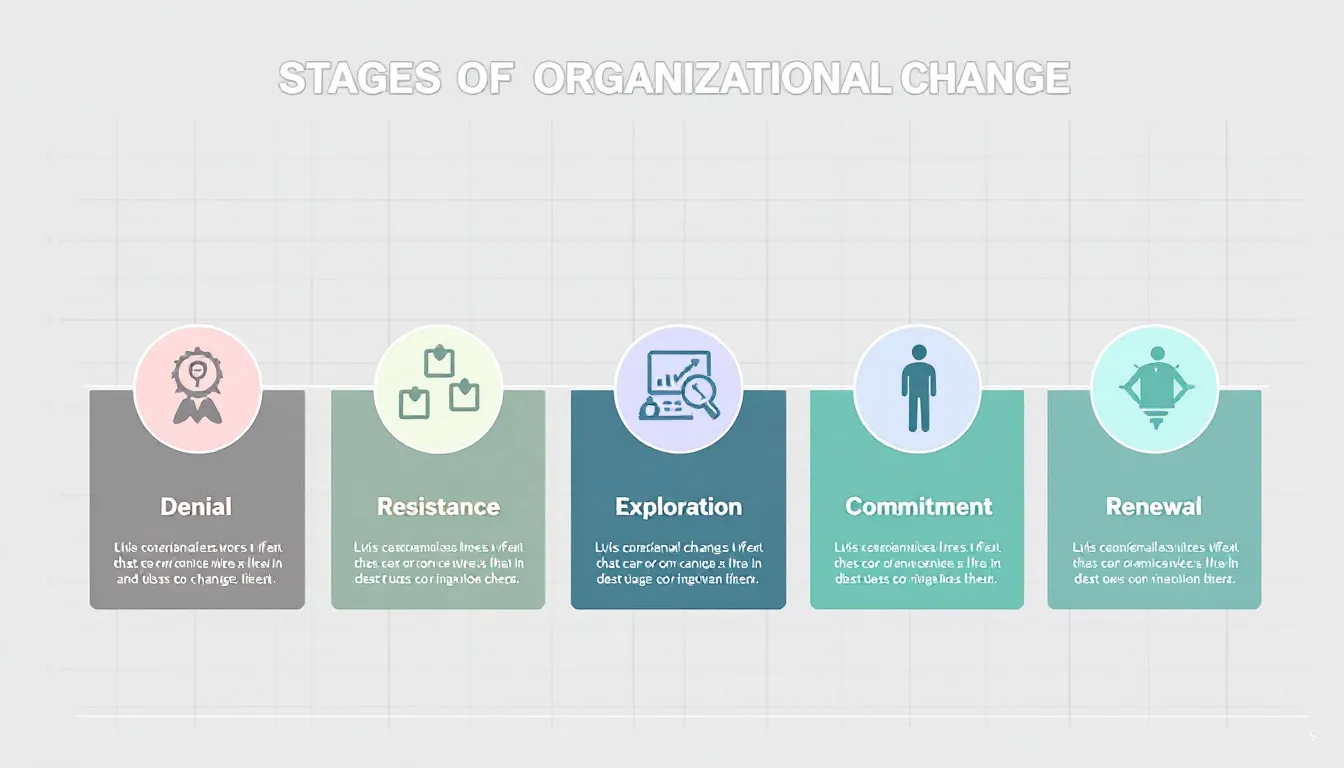
Toyota’s implementation of lean manufacturing principles provides an excellent example of Lewin’s model in practice. The company first unfroze existing manufacturing mindsets by demonstrating the inefficiencies and waste in traditional production methods. During the change phase, employees learned new approaches to quality control, inventory management, and continuous improvement. Finally, Toyota refroze these new behaviors by embedding them in training programs, performance metrics, and organizational culture.
This model is particularly effective for cultural transformations, process improvements, and situations where organizations need to break entrenched habits or ways of thinking. However, it may be less suitable for environments requiring continuous adaptation or where the desired future state is not clearly defined.
Core Change Management Strategies for Success
Implementing successful organizational change requires more than selecting the right model; it demands a comprehensive approach that addresses the key factors that determine whether transformation efforts succeed or fail. Based on extensive research and practical experience, several core strategies consistently emerge as critical success factors for managing organizational change effectively.
Building Strong Sponsorship and Leadership Alignment
Executive sponsorship represents the single most important factor in change management success. Research consistently shows that projects with strong, visible leadership support are six times more likely to achieve their objectives compared to those with weak or absent sponsorship. This isn’t simply about having executives approve budgets or sign off on project charters; it requires active, ongoing leadership engagement throughout the change process.
Effective sponsorship begins with ensuring that senior management understands their role as change champions. Sponsors must be visible advocates for the change, consistently communicating the importance of the initiative and demonstrating their personal commitment through actions, not just words. This involves participating in training sessions, attending town hall meetings, and making themselves available to address employee concerns.
Building a guiding coalition extends sponsorship beyond the C-suite to include influential leaders at multiple levels throughout the organization. This coalition should include formal leaders with organizational authority as well as informal influencers who have credibility with different employee groups. The coalition serves as the backbone of the change effort, providing consistent messaging and support across all areas of the organization.
Leadership alignment is equally critical. When executives send mixed messages or appear divided about the change initiative, employees quickly sense the discord and may adopt a wait-and-see attitude. Before launching any major change effort, organizations must invest time in ensuring that all leaders understand the strategic vision, agree on the approach, and commit to supporting the initiative publicly and privately.
Sponsor assessment frameworks help organizations evaluate the readiness and capability of their leadership team. These assessments examine factors such as the sponsor’s understanding of their role, their availability to support the change effort, their influence within the organization, and their willingness to hold others accountable for change adoption. When gaps are identified, targeted coaching and support can help improve sponsor effectiveness.
Regular sponsor briefings and commitment letters help maintain leadership engagement throughout the change process. These tools provide structured ways to keep sponsors informed about progress, address emerging challenges, and reinforce their ongoing commitment to the initiative. They also create accountability mechanisms that help ensure consistent leadership support over time.
Strategic Communication and Stakeholder Engagement
Communication serves as the connective tissue that holds change initiatives together. Effective communication strategies go far beyond simply informing employees about upcoming changes; they create understanding, build commitment, and provide the ongoing dialogue necessary to navigate the complexities of organizational transformation.
A multi-channel communication strategy ensures that messages reach all stakeholders through their preferred communication methods. This typically includes town hall meetings for face-to-face interaction, newsletters and intranet updates for detailed information, email communications for urgent updates, and informal discussions to address individual concerns. The key is using multiple touchpoints to reinforce key messages and accommodate different communication preferences.
Timing and frequency of communications must be carefully planned to maintain momentum without overwhelming employees with information. Early communications focus on building awareness and explaining the rationale for change. As implementation progresses, communications shift to providing updates on progress, celebrating successes, and addressing challenges. Throughout the process, regular communication helps prevent rumors and misinformation from undermining the change effort.
Stakeholder analysis provides the foundation for targeted engagement strategies. Using tools like power/influence grids, organizations can identify key stakeholders, understand their potential impact on the change initiative, and develop appropriate engagement tactics. High-influence supporters become champions who help advocate for the change, while high-influence skeptics require special attention to address their concerns and win their support.
The “What’s in it for me” (WIIFM) question represents one of the most important elements of effective change communication. Every stakeholder group wants to understand how the change will affect them personally. Communication strategies must clearly articulate the benefits of change for different audiences while honestly acknowledging potential challenges or disruptions. This honest, transparent approach builds trust and credibility with employees.
Communication templates and messaging frameworks ensure consistency across all touchpoints while allowing for customization based on audience needs. These tools help maintain message discipline while empowering local leaders to adapt communications for their specific teams or departments. Standard templates also help ensure that important information is not overlooked and that communications maintain a professional, consistent tone.
Interactive communication opportunities, such as Q&A sessions, feedback surveys, and focus groups, create two-way dialogue that helps leaders understand employee concerns and adjust their approach accordingly. These forums also demonstrate that leadership values employee input and is committed to addressing legitimate concerns about the change process.
Training and Capability Development
Successful change management requires more than simply telling people what to do differently; it requires building the knowledge, skills, and capabilities necessary for sustained behavior change. Comprehensive training and development programs serve as critical enablers of successful transformation by ensuring that employees have the tools they need to succeed in the new environment.
Needs assessment processes provide the foundation for effective training programs by identifying specific skill gaps and learning requirements. These assessments examine the differences between current capabilities and future requirements, taking into account factors such as existing skill levels, job roles, and individual learning preferences. The assessment results guide decisions about training content, delivery methods, and resource allocation.
Blended learning approaches combine multiple delivery methods to accommodate different learning styles and practical constraints. This might include e-learning modules for foundational knowledge, hands-on workshops for skill development, one-on-one coaching for personalized support, and job aids for just-in-time reference. The combination of methods ensures that learning is both comprehensive and practical.
Just-in-time training delivery aligns learning opportunities with implementation timelines to maximize retention and application. Rather than providing all training at once, this approach delivers education and support when employees need it most. This timing helps prevent information overload while ensuring that new knowledge is immediately applicable.
Competency frameworks define the specific knowledge, skills, and behaviors required for success in the new environment. These frameworks serve as roadmaps for individual development and provide clear expectations for performance. They also help organizations identify high-potential employees who can serve as early adopters and change champions.
Certification programs create formal recognition for employees who demonstrate mastery of new capabilities. These programs provide motivation for learning while also creating a pool of qualified individuals who can support ongoing change efforts. Certification can also serve as a career development opportunity that helps retain key talent during periods of transformation.
Ongoing support mechanisms ensure that learning continues beyond formal training programs. This includes access to help desks, peer support networks, refresher training sessions, and continuous improvement opportunities. By providing ongoing support, organizations help employees navigate the inevitable challenges that arise when implementing new processes or technologies.
Common Change Management Challenges and Solutions
Even with the best planning and frameworks in place, change initiatives frequently encounter obstacles that can derail progress or undermine long-term success. Understanding these common challenges and having proven strategies to address them is essential for any leader responsible for managing organizational change. The following section explores the most frequent barriers to successful change and provides practical solutions based on research and real-world experience.
Overcoming Employee Resistance
Employee resistance represents perhaps the most universal challenge in change management, appearing in virtually every transformation initiative regardless of size, industry, or type of change. However, resistance is rarely random or irrational; it typically stems from legitimate concerns and fears that, when properly understood and addressed, can be transformed into engagement and support.
The root causes of resistance vary significantly but often fall into several predictable categories. Fear of job loss or reduced job security tops the list of employee concerns, particularly during restructuring or automation initiatives. Increased workload expectations, whether real or perceived, create anxiety about work-life balance and professional sustainability. Loss of status or influence within the organization threatens individual identity and career aspirations. Past negative experiences with change initiatives create skepticism about leadership’s ability to deliver on promises and commitments.

Resistance assessment tools help change managers identify potential sources of opposition before they become major obstacles. These tools typically include employee surveys, focus groups, and one-on-one interviews designed to uncover concerns, misconceptions, and potential barriers to adoption. Early warning indicators might include decreased engagement scores, increased absenteeism, negative feedback in team meetings, or informal resistance networks forming among employees.
Engagement strategies must be tailored to address the specific type and source of resistance encountered. Rational resistance, based on logical concerns about the change initiative, responds well to data, evidence, and clear explanations. Emotional resistance, rooted in fear or anxiety, requires empathy, support, and opportunities for employees to process their feelings. Political resistance, arising from power struggles or competing interests, demands negotiation, coalition building, and sometimes structural changes.
Listening tours and feedback sessions create safe spaces for employees to voice concerns and feel heard by leadership. These forums serve multiple purposes: they provide valuable intelligence about resistance sources, demonstrate leadership’s commitment to employee welfare, and create opportunities to address misconceptions before they spread throughout the organization. The key is ensuring that these sessions result in visible action, not just passive listening.
Co-creation workshops engage potential resistors in designing solutions and implementation approaches. By involving skeptical employees in problem-solving activities, organizations can transform opposition into ownership. These workshops also leverage employee expertise and insights, often resulting in better solutions than those developed by leadership teams alone.
Specific tactics for different resistance types require nuanced approaches. For employees concerned about job security, organizations might provide retraining opportunities, internal mobility programs, or clear communication about retention commitments. For those worried about increased workload, phased implementation approaches or additional resource allocation might be necessary. For employees experiencing loss of status, new role definitions or recognition programs can help address these concerns.
Managing Change Fatigue and Competing Priorities
Change fatigue represents a growing challenge for organizations that are pursuing multiple transformation initiatives simultaneously or operating in environments requiring constant adaptation. When employees become overwhelmed by the pace and volume of change, their ability to absorb new information, learn new skills, and sustain new behaviors significantly diminishes.
Symptoms of change saturation include declining performance on change initiatives, increased employee turnover, reduced engagement scores, and expressed frustration with the pace of change. Employees may also exhibit cynicism toward new initiatives, decreased willingness to participate in training or feedback sessions, and increased resistance to even small modifications to existing processes.
Change portfolio management approaches help organizations sequence and prioritize initiatives to minimize overlap and competing demands on employee attention. This involves evaluating all active and planned change initiatives, assessing their resource requirements and potential conflicts, and developing implementation schedules that allow adequate time for adoption and stabilization between major changes.
Change capacity assessment frameworks evaluate an organization’s ability to absorb and sustain transformation based on factors such as current workload, leadership bandwidth, resource availability, and recent change history. These assessments help determine optimal timing for new initiatives and identify when organizations need to slow down or consolidate before launching additional changes.
Strategies for protecting core business operations during transformation include maintaining clear boundaries between business-as-usual activities and change initiatives, ensuring adequate staffing for both operational and change responsibilities, and establishing communication protocols that keep customers and stakeholders informed without alarming them about internal disruptions.
Resource allocation becomes particularly critical during multiple change initiatives. Organizations must ensure that change efforts have dedicated resources rather than expecting employees to manage transformation activities in addition to their regular responsibilities. This might involve temporarily reassigning staff, hiring additional personnel, or engaging external consultants to support implementation activities.
Sustaining Change and Preventing Regression
One of the most frustrating aspects of change management is watching carefully implemented improvements gradually fade as employees revert to old habits and familiar ways of working. The “forgetting curve” describes this natural tendency for new behaviors to diminish over time without proper reinforcement and support.
Preventing regression requires systematic attention to embedding new behaviors in organizational systems, processes, and culture. This goes beyond simply training employees on new procedures; it involves creating an environment where new behaviors are easier to perform than old ones and where positive reinforcement consistently supports desired actions.
Reinforcement strategies must be multifaceted and sustained over time. Performance metrics that measure adoption of new behaviors provide objective feedback about progress and areas needing attention. Reward systems should recognize and celebrate employees who demonstrate new behaviors consistently, while consequences for non-compliance must be clear and consistently applied. Recognition programs can highlight success stories and create peer pressure for continued adoption.
Embedding changes in organizational systems requires updating policies, procedures, job descriptions, and performance standards to reflect new expectations. Technology systems should support new processes rather than forcing employees to work around limitations. Hiring and promotion criteria should incorporate the skills and mindsets necessary for success in the new environment.
Post-implementation review frameworks provide structured approaches for evaluating change effectiveness and identifying areas for improvement. These reviews typically examine both quantitative measures (such as adoption rates, performance improvements, and cost savings) and qualitative factors (such as employee satisfaction, customer feedback, and cultural alignment).
Continuous improvement processes ensure that changes evolve and improve over time rather than becoming static procedures. This involves regular assessment of effectiveness, gathering feedback from users, and making adjustments based on experience and changing conditions. Organizations that treat change as an ongoing process rather than a one-time event typically achieve better long-term results.
Measuring Change Management Effectiveness
Measuring the effectiveness of change management efforts requires a comprehensive approach that examines both the immediate adoption of new behaviors and the long-term sustainability of transformation results. Without proper measurement and tracking, organizations cannot determine whether their change investments are producing desired outcomes or identify areas needing additional attention.
Effective measurement systems distinguish between leading indicators and lagging indicators, providing both early warning signals and ultimate outcome measures. Leading indicators focus on process measures that predict future success, such as adoption rates, training completion statistics, communication reach and engagement metrics, and employee feedback scores. These measures help change managers identify potential problems early and make course corrections before they impact final results.
Lagging indicators examine the ultimate business results and long-term outcomes of change initiatives. These might include financial performance improvements, customer satisfaction scores, employee retention rates, operational efficiency gains, and market share growth. While lagging indicators provide crucial validation of change success, they typically become available only after implementation is well underway or complete.
Dashboard templates for tracking change progress should present information in an easily digestible format that enables quick decision-making by leadership teams. Effective dashboards typically include visual representations of adoption rates across different departments or employee groups, progress against implementation milestones, risk indicators that highlight areas of concern, and trend analysis that shows whether momentum is building or declining.
Key metrics for change management effectiveness include adoption rates that measure how many employees are using new processes or technologies as intended, proficiency levels that assess how well employees are performing new behaviors, engagement scores that indicate employee commitment to the change, and sustainability measures that track whether new behaviors persist over time.
ROI calculation methodologies for change management investments help organizations understand the financial value of their transformation efforts. This involves comparing the costs of change management activities (including training, communication, consulting, and lost productivity) against the benefits achieved (such as increased revenue, cost savings, improved efficiency, and risk reduction). While some benefits are difficult to quantify precisely, establishing even rough estimates helps justify change management investments and guide future resource allocation decisions.
Benchmarking data from industry studies provides valuable context for interpreting internal results. Organizations can compare their change success rates, timeline achievements, and adoption metrics against industry averages to understand whether their performance is competitive. Prosci’s Best Practices Research, for example, provides benchmarking data based on thousands of change initiatives across various industries and organization types.
Regular reporting cycles ensure that measurement information is used to guide ongoing decision-making rather than simply collected for historical purposes. Most successful organizations establish weekly or monthly review cycles during active implementation phases, with less frequent but still regular reviews during sustainment phases. These review cycles should include analysis of trends, identification of emerging risks or opportunities, and development of action plans to address any concerns.
Building Organizational Change Capability
While individual change initiatives are important, organizations that consistently succeed with transformation efforts typically develop enterprise change management as a strategic organizational competency. This involves building systematic capabilities, processes, and resources that can be applied across multiple change initiatives rather than starting from scratch with each new project.
Enterprise change management represents a mature approach to organizational transformation that treats change capability as a core business competency rather than an ad hoc activity. Organizations with strong enterprise change management capabilities typically have established change management methodology, dedicated change management resources, standardized tools and templates, and formal processes for evaluating and prioritizing change initiatives.
Change management maturity models provide frameworks for assessing current capabilities and identifying areas for improvement. These models typically progress through stages from ad hoc change management (where each initiative is managed independently with limited structure) through repeatable processes and defined methodologies to optimized approaches that continuously improve based on experience and best practices.
Assessment frameworks help organizations understand their current change management maturity and identify specific areas needing development. These assessments typically examine factors such as leadership support for change management, availability of dedicated change resources, existence of standardized methodologies and tools, measurement and evaluation capabilities, and integration with other business processes.
Change agent networks create distributed capability throughout the organization by training employees in change management principles and techniques. These networks typically include full-time change professionals, part-time change champions, and occasional change supporters who can be called upon when needed. The network approach helps ensure that change management expertise is available when and where it’s needed without requiring every department to develop internal expertise.
Internal capability development programs provide ongoing education and skill development for employees involved in change management activities. These programs might include formal certification training, mentoring relationships, communities of practice, and regular knowledge-sharing sessions. By developing internal expertise, organizations reduce their dependence on external consultants while building institutional knowledge about what works in their specific context.
Decisions about when to use internal resources versus external consultants depend on factors such as the complexity and scope of the change initiative, availability of internal expertise, organizational politics and credibility issues, and budget considerations. External consultants often bring specialized expertise, objectivity, and additional capacity, while internal resources provide organizational knowledge, cultural understanding, and long-term sustainability.
Change management certification options from organizations like Prosci, ACMP (Association of Change Management Professionals), and various universities provide formal recognition of change management expertise. These certifications help individuals develop skills while also providing organizations with confidence in their change management capabilities.
Professional development paths for change management practitioners help organizations attract and retain skilled change professionals. Career progression opportunities, continuing education support, and recognition programs demonstrate organizational commitment to developing change capability as a strategic asset.
Future Trends in Change Management
The field of change management continues to evolve rapidly, driven by technological advances, changing workforce expectations, and new insights from behavioral science research. Understanding these emerging change management trends helps organizations prepare for future transformation challenges while building capabilities that will remain relevant in an increasingly dynamic business environment.
Digital transformation has fundamentally altered how change management is practiced, creating both new opportunities and new challenges. Virtual teams require different approaches to communication, training, and relationship building than traditional co-located groups. Digital learning platforms enable more personalized and scalable training experiences while providing detailed analytics about learning progress and effectiveness. AI-powered analytics can identify patterns in employee behavior, predict resistance, and recommend interventions based on successful approaches used in similar situations.
The shift toward remote and hybrid work models has accelerated the adoption of digital change management tools and techniques. Virtual town halls, online collaboration platforms, and digital feedback systems have become standard components of change communication strategies. However, this digital shift also creates new challenges related to building personal connections, maintaining organizational culture, and ensuring that all employees have equal access to information and support.
Agile change management approaches have gained popularity as organizations face increasingly rapid and iterative transformation requirements. Rather than following linear, sequential change models, agile approaches emphasize flexibility, continuous feedback, and rapid adaptation. This might involve shorter planning cycles, more frequent communication touchpoints, and iterative implementation approaches that allow for course corrections based on early results and feedback.
Neuroscience insights are beginning to influence change management practices by providing deeper understanding of how people process and respond to change at a neurological level. Research on cognitive load, decision fatigue, and habit formation is informing new approaches to training design, communication strategies, and behavioral reinforcement techniques. These insights help explain why certain change management practices are effective and suggest new approaches for overcoming resistance and sustaining new behaviors.

Psychological safety has emerged as a critical factor in successful change management. Organizations are recognizing that employees need to feel safe to experiment, make mistakes, and provide honest feedback about change initiatives. This requires leadership approaches that encourage learning and growth rather than punishing errors, and organizational cultures that value curiosity and adaptation over adherence to established procedures.
Inclusive change practices ensure that transformation efforts consider the diverse needs, perspectives, and experiences of all employees. This involves designing change processes that accommodate different cultural backgrounds, learning styles, communication preferences, and accessibility requirements. Inclusive approaches often result in more effective change strategies while also supporting organizational diversity, equity, and inclusion goals.
Sustainability-driven transformation represents a growing area of focus as organizations respond to environmental challenges and stakeholder expectations around corporate responsibility. These changes often require fundamental shifts in business strategy, operational processes, and organizational culture. Change management plays a crucial role in helping employees understand and embrace sustainability goals while developing the capabilities needed to support new business models.
The integration of change management with other business disciplines continues to evolve. Organizations are recognizing the connections between change management and areas such as strategic planning, risk management, customer experience, and digital transformation. This integration helps ensure that change management is not treated as an isolated activity but rather as an essential component of overall business strategy and execution.
Continuous change capability is becoming increasingly important as organizations recognize that transformation is not a series of discrete projects but an ongoing organizational capability. This requires developing cultures that embrace change as a normal part of business operations, building skills and processes that support continuous adaptation, and creating systems that can handle multiple concurrent changes without overwhelming employees or disrupting business operations.
The future of change management likely rests on organizations’ ability to combine proven frameworks and principles with emerging technologies and insights. Successful organizations will be those that maintain focus on the human elements of change while leveraging new tools and approaches to enhance their effectiveness and efficiency in managing organizational transformation.
Conclusion
Change management has evolved from a peripheral business activity to a core strategic capability that determines organizational success in today’s dynamic environment. The frameworks, strategies, and practices outlined in this guide provide a comprehensive roadmap for leading successful transformation initiatives while building the long-term capabilities necessary for sustained competitive advantage.
The key to effective change management lies in recognizing that transformation success depends more on winning hearts and minds than on implementing technical solutions. Organizations that invest in structured change management processes, develop strong leadership capabilities, and maintain focus on the human side of change consistently outperform those that treat transformation as purely a technical or operational challenge.
As you embark on your own change management journey, remember that building organizational change capability is itself a transformation process that requires patience, persistence, and continuous learning. Start with proven frameworks like Kotter’s 8-Step Process or the ADKAR Model, but adapt them to fit your organization’s unique context and culture. Focus on developing strong sponsorship, clear communication, and comprehensive support for employees throughout the change process.
The competitive advantage of effective change management becomes increasingly important as the pace of business transformation continues to accelerate. Top change management consulting firms and organizations that master the art and science of managing organizational change will be better positioned to capitalize on emerging opportunities, respond to market disruptions, and build the resilient, adaptable cultures necessary for long-term success in an uncertain world.
Frequently Asked Questions
How are digital transformation and change management connected?
Digital transformation and change management are closely connected because successful digital initiatives require technology, people, processes, and culture to work together. Change management provides a structured approach to prepare employees, align leaders, and embed new behaviors so that digital tools and processes are adopted effectively. Without addressing the human and organizational side of change, digital transformation efforts can fail to deliver expected results. By integrating change management into digital transformation, organizations can ensure smoother adoption, higher engagement, and sustainable business outcomes.
Culture Partners, as a change management consultancy, supports this process by providing consulting for digital transformation change management. Culture Partners’ consultants help organizations align strategy, culture, and people, equip leaders, train teams, and embed changes into operations to support successful technology adoption.
How can organizations improve communication during company restructuring?
Organizations can improve communication during company restructuring by clearly articulating the change’s purpose and setting expectations. Keeping employees informed throughout the process helps reduce uncertainty and build trust. Sharing a consistent vision, providing regular updates, and offering opportunities for feedback help employees understand the transition and its impact on their roles. Transparent, two-way communication fosters trust, reduces resistance, and encourages engagement, making it easier for the organization to embed new behaviors and sustain results.
Working with a change management consultancy like Culture Partners can help organizations design and implement these communication strategies during company restructuring. Change management consultants provide guidance on messaging, stakeholder engagement, and feedback mechanisms to ensure that communication supports adoption and alignment throughout the restructuring process.
What should be included in a change management communication plan checklist?
A change management communication plan checklist should include the essential elements that ensure clear, consistent, and effective communication throughout a change initiative. It outlines what to communicate, to whom, how often, and through which channels, while also providing opportunities for feedback and leadership engagement.
Here are the key items to include in a change management communication plan checklist:
- Define the vision and clearly explain the rationale for the change
- Identify all stakeholder groups and tailor messages for each audience
- Select and use multiple communication channels (emails, town halls, intranet updates, team meetings)
- Schedule the timing and frequency of communications to maintain momentum
- Provide opportunities for two-way feedback (Q&A sessions, surveys, focus groups)
- Develop and use standardized communication templates and messaging frameworks
- Engage leaders and change champions to reinforce key messages consistently
- Monitor communication effectiveness and adjust strategies as needed