
Traditional cultural change initiatives fail 70% of the time, leaving organizations struggling with low employee engagement, resistance to new processes, and misaligned values. However, companies integrating AI in cultural change management are achieving unprecedented success rates, with some reporting 40% higher adoption rates and 25-30% faster implementation timelines.
The convergence of artificial intelligence and organizational culture represents a fundamental shift in how leaders approach cultural transformation. By leveraging ai systems to analyze employee sentiment, identify patterns in organizational behavior, and deliver personalized change strategies, companies can finally move beyond guesswork and embrace ai as a strategic partner in cultural evolution.
This comprehensive guide explores how to successfully implement ai powered tools in your cultural transformation journey, from initial assessment through long-term sustainability. You’ll discover proven methodologies, ethical considerations, and practical frameworks that turn cultural change from a costly gamble into a data driven success story.
The Strategic Role of AI in Cultural Transformation
Cultural transformation has traditionally relied on intuition, surveys, and broad-stroke strategies that often miss the nuanced realities of organizational culture. Integrating AI in cultural change management revolutionizes this approach by providing valuable insights into organizational behavior patterns that would be impossible to detect through conventional methods.
AI systems excel at processing vast amounts of employee communication data, identifying subtle shifts in employee sentiment, and recognizing early indicators of cultural resistance or acceptance. Unlike traditional approaches that capture snapshots of organizational culture through quarterly surveys, ai technologies enable continuous monitoring and real-time adjustments to change strategies.
The economic implications are staggering. McKinsey estimates that AI could contribute up to $13 trillion to global economic output by 2030, with a significant portion of this value creation dependent on successful cultural transformation that enables organizations to effectively embrace ai and leverage its capabilities. Organizations that fail to integrate AI thoughtfully into their company culture risk falling behind competitors who master this integration.
Traditional cultural change approaches often fail because they operate reactively, addressing problems after they’ve already impacted employee engagement and business performance. AI enables organizations to anticipate future trends and identify potential cultural issues before they escalate, shifting from reactive firefighting to proactive cultural stewardship.
The most successful implementations focus on augmenting human insight rather than replacing it. AI supports change management professionals by providing deeper insights into employee behavior patterns, but the human element remains crucial for interpreting these insights and designing culturally appropriate interventions.
AI-Powered Cultural Assessment and Analysis
Modern cultural assessment requires sophisticated tools that can process multiple data streams simultaneously. Machine learning algorithms now analyze employee communications, survey responses, performance data, and behavioral indicators to create comprehensive cultural maps that reveal both explicit and implicit organizational values.
Natural language processing technologies decode employee sentiment from diverse sources including Slack messages, email communications, feedback forms, and performance reviews. These ai algorithms can identify subtle language patterns that indicate stress, engagement levels, resistance to change, or alignment with organization’s core values.
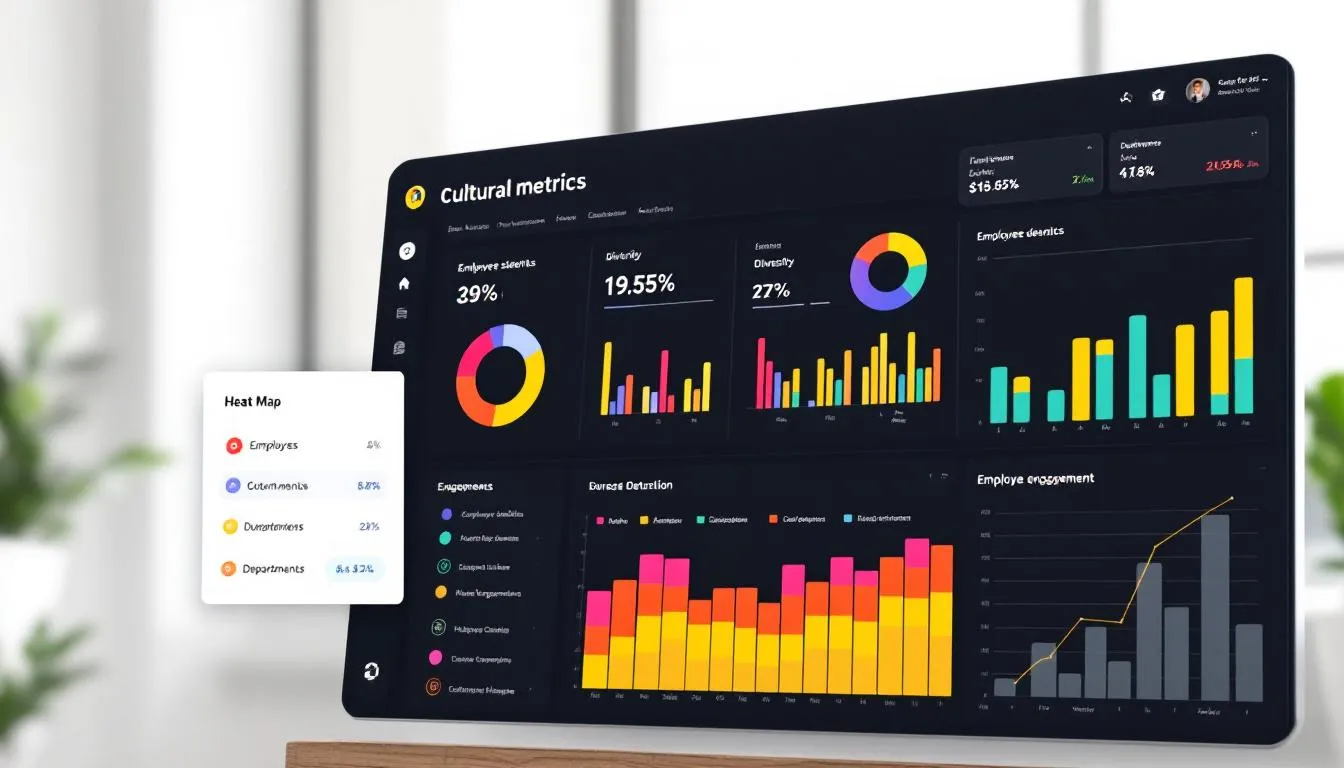
Real-time dashboards aggregate this information into actionable cultural health metrics. Leaders can monitor engagement scores, collaboration patterns, value alignment indicators, and change readiness across different departments, geographical locations, and employee demographics. This continuous feedback loop enables rapid adjustments to cultural change strategies.
Fortune 500 companies are already leveraging platforms like Glint, Culture Amp, and Microsoft Viva Insights to transform their approach to organizational culture. These ai powered analytics platforms provide predictive models that forecast cultural risks and opportunities, enabling proactive intervention strategies.
Sentiment Analysis for Cultural Insights
Technical implementation of sentiment analysis requires careful integration of multiple data sources while maintaining employee privacy and trust. AI systems process text data using advanced natural language processing techniques that can identify emotional undertones, stress indicators, and cultural alignment signals across thousands of employee communications.
The integration process typically involves connecting APIs from collaboration platforms, survey tools, and HR systems to create a unified data stream. Predictive models then analyze historical patterns to forecast potential cultural disruptions, enabling change management teams to address issues before they impact productivity or retention.
Privacy protection measures are essential for successful implementation. Organizations must establish clear data governance frameworks that comply with GDPR and other privacy regulations while ensuring employee consent and transparency. The most effective approaches involve employee participation in defining which data points are monitored and how insights are used to improve their work experience.
Advanced sentiment analysis can identify patterns that human observers might miss, such as gradual shifts in communication tone that precede major cultural changes or early indicators of team dysfunction. This capability enables organizations to maintain cultural stability while navigating complex transformations.
Personalized Change Management Strategies
One-size-fits-all change management approaches consistently underperform because they fail to account for the diverse ways employees process and respond to organizational change. AI algorithms can segment employees based on change readiness, communication preferences, generational characteristics, and individual cultural values to create targeted intervention strategies.
Customized messaging frameworks adapt communication strategies to different generational cohorts, with Gen Z employees often preferring mobile-first, visual communication while Gen X workers may respond better to detailed email explanations. AI systems can automatically adjust message timing, format, and content based on individual preference patterns.
Behavioral nudges and micro-interventions delivered through personalized AI recommendations have shown remarkable effectiveness. Rather than overwhelming employees with broad change initiatives, ai powered tools can suggest specific, manageable actions that align with individual work styles and cultural preferences.

Research demonstrates that organizations using AI-personalized change communication strategies achieve 40% higher adoption rates compared to traditional broadcast approaches. This improvement stems from the system’s ability to deliver relevant information at optimal timing while avoiding change fatigue.
The key to successful personalization lies in balancing automation with human judgment. While AI can identify patterns and suggest interventions, change management professionals must validate these recommendations against broader organizational context and ethical considerations.
Building AI-Ready Cultural Foundations
Creating an ai ready culture requires fundamental shifts in how organizations approach learning, decision-making, and human-machine collaboration. Leadership development programs must prepare managers to guide teams through ai transformation while maintaining focus on human-centered approaches that preserve employee agency and creativity.
Cultural values redefinition becomes essential as organizations learn to embrace ai. This process involves updating organizational principles to emphasize continuous learning, experimentation, data driven insights, and human-AI collaboration rather than traditional hierarchical decision-making structures.
Employee training frameworks should focus on developing AI literacy without creating anxiety about job displacement. The most successful programs frame new technology as augmentation rather than replacement, helping employees understand how ai tools can enhance their capabilities and create opportunities for higher-value work.
Change agent networks prove particularly effective when they leverage employees who are natural early adopters of new technologies. These internal champions can demonstrate practical applications of ai powered tools while addressing concerns and resistance from their peers.
Overcoming Resistance to AI-Driven Cultural Change
Common resistance patterns include job displacement fears, technology anxiety, and concerns about reduced human agency in decision-making. Different employee segments exhibit varying resistance types, with front-line workers often fearing automation while knowledge workers may worry about AI replacing their analytical capabilities.
AI-powered early warning systems can identify resistance hotspots by monitoring communication patterns, engagement metrics, and sentiment trends across the organization. These systems alert change management teams to emerging issues before they spread organizationally, enabling targeted intervention strategies.
Targeted intervention strategies leverage behavioral psychology principles combined with AI-recommended communication approaches. For example, employees showing technology anxiety might receive additional training resources and peer mentoring, while those concerned about job security could be connected with reskilling opportunities and career development pathways.
Success stories from companies like Microsoft and Salesforce demonstrate how systematic approaches to resistance management can transform initial skepticism into ai success. These organizations invested heavily in transparent communication, extensive training programs, and employee involvement in AI tool selection and implementation.
Ethical Considerations in AI Cultural Management
Data privacy frameworks must ensure employee consent and transparency in all AI cultural monitoring initiatives. Organizations need clear policies governing what employee data is collected, how it’s analyzed, and who has access to insights derived from this analysis. Employees should understand and approve the monitoring systems that affect their work environment.
Algorithmic bias prevention measures are crucial to avoid perpetuating unfair cultural practices or discrimination. AI systems can inadvertently amplify existing biases in organizational culture, making it essential to regularly audit algorithms for fairness across different demographic groups and ensure diverse teams participate in AI system design.
Human oversight protocols require change managers to validate AI recommendations before implementation. While AI can process vast amounts of data and identify patterns, human judgment remains essential for interpreting cultural context and ensuring recommendations align with organizational values and ethical principles.

Ethical guidelines for using employee behavioral data must balance organizational benefits with individual privacy rights. The most successful frameworks involve employees in defining acceptable use cases and provide clear mechanisms for opting out of certain types of monitoring while still participating in cultural transformation initiatives.
Transparency about AI decision-making processes builds trust and enables employees to understand how technology influences their work environment. Organizations should provide clear explanations of how AI systems work, what data they use, and how insights are translated into cultural change strategies.
Measuring Success and ROI of AI Cultural Initiatives
Key performance indicators for AI-driven cultural change extend beyond traditional metrics to include employee engagement scores, cultural alignment measurements, change adoption rates, and predictive indicators of future cultural health. These metrics provide a comprehensive view of transformation progress across multiple dimensions.
Predictive analytics reveal correlations between AI-driven cultural changes and business outcomes including revenue growth, employee retention, customer satisfaction, and innovation metrics. Organizations can demonstrate clear connections between cultural improvements and bottom-line results, justifying continued investment in ai technologies.
Real-time monitoring dashboards track cultural transformation progress across departments, geographical locations, and employee demographics. These dashboards enable leaders to identify successful strategies, spot emerging issues, and adjust approaches based on continuous feedback from ai powered analytics.
ROI calculations consistently demonstrate 25-30% faster cultural change implementation when using AI-powered methodologies compared to traditional approaches. This acceleration stems from improved targeting, personalized interventions, and early identification of resistance patterns that might otherwise derail transformation efforts.
Long-term value creation extends beyond immediate cultural change to include enhanced organizational agility, improved decision-making capabilities, and competitive advantage through superior human-AI collaboration. Organizations that successfully integrate AI into their cultural transformation develop capabilities that compound over time.
Future Trends in AI-Enabled Cultural Change
Emerging technologies including virtual reality for immersive cultural training and augmented reality for real-time coaching represent the next frontier in cultural transformation. These technologies will enable experiential learning that helps employees understand new cultural values through simulated scenarios and immediate feedback.
Integration with IoT workplace sensors will provide unprecedented insights into physical collaboration patterns and workspace cultural dynamics. Smart building technologies can reveal how employees actually use spaces, identify informal collaboration networks, and suggest environmental changes that support desired cultural behaviors.
Advanced predictive models will anticipate cultural needs during mergers, acquisitions, and organizational restructuring with greater accuracy than current systems. These models will help leaders proactively address cultural integration challenges and maintain organizational stability during complex transitions.
The evolution toward autonomous cultural management systems requiring minimal human intervention by 2030 represents a fundamental shift in how organizations approach cultural stewardship. While human oversight will remain essential, AI systems will increasingly handle routine monitoring, intervention recommendations, and progress tracking.

Generative ai will enable creation of customized cultural content, training materials, and communication strategies tailored to specific organizational contexts. This capability will reduce the time and cost associated with developing cultural change resources while improving relevance and effectiveness.
The convergence of multiple ai technologies will create integrated cultural management platforms that seamlessly combine assessment, intervention, monitoring, and optimization capabilities. These platforms will enable organizations to treat cultural development as a continuous, data-driven process rather than periodic initiative.
Conclusion
Integrating AI in cultural change management represents a fundamental evolution in how organizations approach their most critical transformation challenges. The evidence is clear: companies that thoughtfully combine human expertise with ai powered insights achieve superior results in employee engagement, change adoption, and business performance.
The journey requires careful attention to ethical considerations, employee privacy, and the preservation of human agency in cultural decision-making. However, organizations that master this integration gain significant competitive advantage through enhanced organizational agility, deeper insights into employee needs, and the ability to anticipate and address cultural challenges before they impact performance.
Success depends on viewing AI as an enhancement to human capability rather than a replacement for human judgment. The most effective implementations combine sophisticated ai technologies with strong human-centered approaches that prioritize employee experience, continuous learning, and collaborative problem-solving.
The future belongs to organizations that can seamlessly blend artificial intelligence with organizational culture, creating environments where both humans and machines contribute their unique capabilities to cultural transformation. The time to begin this integration is now, while the competitive advantages are still emerging and the learning curve can be navigated with strategic patience and careful planning.