
Organizational change management helps organizations manage changes in people, processes, and systems. This guide offers 10 effective change management strategies to ensure changes are adopted successfully and smoothly.
Key Takeaways
- Effective organizational change management requires a structured strategy to minimize resistance and maximize employee engagement, ensuring a smooth transition.
- Communication, transparency, and the alignment of change initiatives with organizational culture are crucial for successfully implementing and sustaining changes.
- Establishing clear objectives and key performance indicators (KPIs) allows organizations to measure success and continuously improve their change management processes.
Understanding Organizational Change Management
Organizational change management (OCM) refers to the methods and strategies used by organizations to manage changes to their people, processes, tools, and systems. This encompasses actions to alter significant components like culture, processes, technology, or hierarchy. The goal is to transition smoothly while maintaining control over the process, ensuring effective organizational change management and that important changes are adopted successfully.
Effective change management transforms uncertainty into opportunity. It reduces barriers and prevents wasted time and money by providing a structured approach to managing change. A solid change management strategy aims to minimize resistance, maximize employee engagement, and align everyone with the new direction to effectively manage change.
As the pace of business continues to accelerate, organizations must be willing to make decisions quickly and adapt to change. The increasing complexity of changes necessitates a systematic approach to management. Without effective change management, organizations risk falling behind as they struggle to navigate the frequent and significant changes they undergo.
The Role of Change Management Strategies
Effective change management strategies are crucial for navigating differing types of organizational changes successfully. Nearly half of all organizational change efforts fail, primarily due to poor planning and execution. Organizations must adapt to various challenges, including technological changes and market competition. Having a business strategy approach to change increases the likelihood of organizational success and aligns organizational change initiatives with long-term goals to manage organizational change and change management initiatives.
A well-prepared organization enhances its chances of successfully implementing change. This preparation begins with:
- Raising awareness among employees about the necessity for change.
- Developing a strategic plan for change that outlines goals, performance indicators, and key stakeholders involved.
- Ensuring transparency during organizational change to help employees feel more comfortable and engaged across the entire organization.
Communication of the vision for change is vital throughout the implementation to keep employees motivated and informed. Change leaders play a crucial role in successful change management through active and visible sponsorship throughout the process.
Key Elements of a Successful Change Management Process
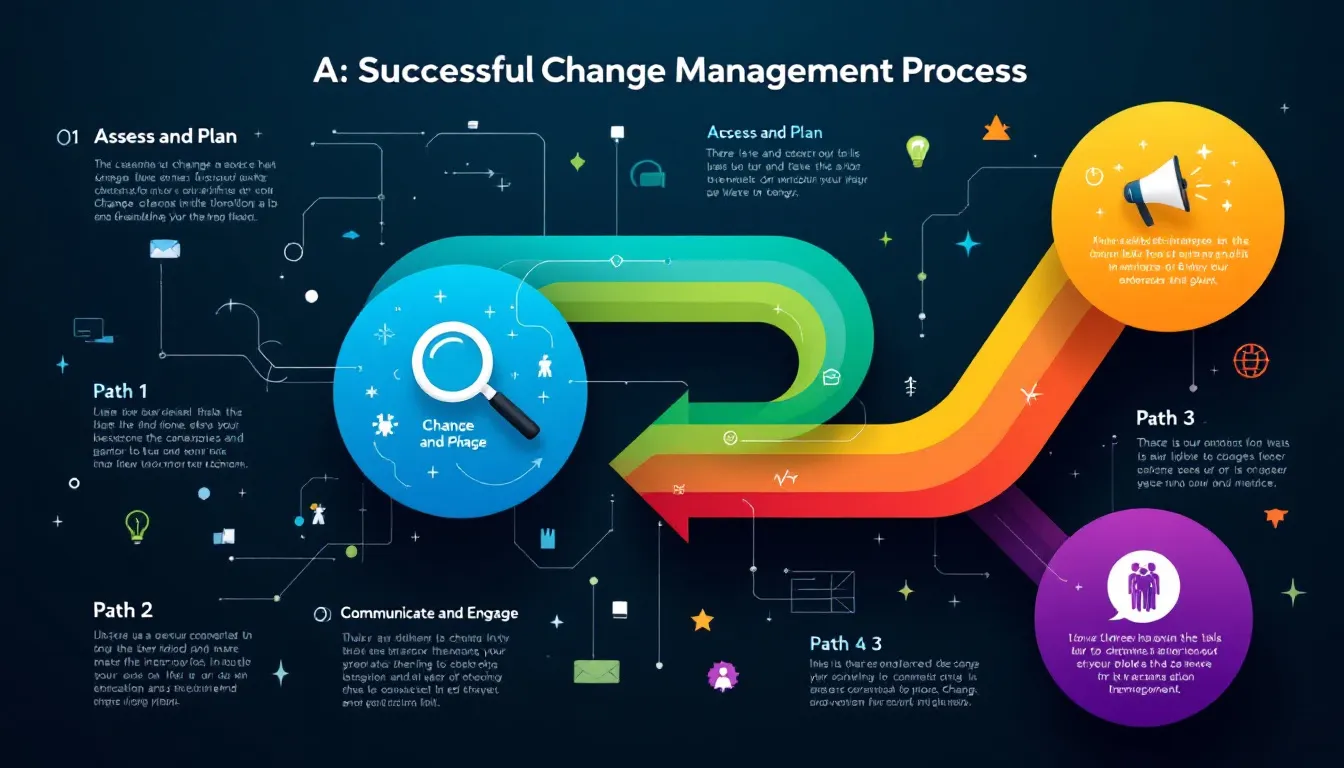
A well-structured change management process involves the entire process of five critical steps:
- Planning
- Preparation
- Implementation process
- Monitoring
- Evaluation
Identifying clear objectives is essential, as it guides the change management plan and helps measure success. Conducting a stakeholder analysis is vital to understanding the perspectives of those affected by the changes.
Effective communication is vital; a communication strategy detailing how to inform stakeholders throughout the change process enhances transparency. Ongoing communication reinforces the rationale behind the changes. An effective communication plan outlines necessary information, target audiences, and delivery methods.
Providing employees with clear objectives and regular updates fosters transparency during change. Establishing channels for ongoing feedback allows teams to adapt the change approach based on stakeholder needs and experiences. These elements form the backbone of a successful change management process, ensuring that changes are implemented smoothly and effectively.
Common Pitfalls in Change Initiatives
Change initiatives often fail due to low internal buy-in and neglecting the people affected by the change. Poor communication is a common reason why change initiatives fail. Transparent communication with employees helps to tackle internal resistance. Setting unrealistic expectations during a change initiative can lead to burnout and disengagement among teams.
Managing both positive and negative outcomes is a key solution for managing expectations during a change initiative. A common characteristic of unsuccessful change initiatives is the lack of a structured approach and planning. When strategies lack a clear and comprehensive plan, it affects overall effectiveness, leading to unintended consequences and total change initiative failure.
Conflict with organizational culture can be a key reason change management strategies fail. It is crucial to align change initiatives with the existing organizational culture to avoid resistance and ensure successful change management. Understanding these pitfalls can help organizations anticipate and mitigate risks, leading to more effective change management.
Crafting a Vision and Strategic Plan
Before implementing changes, having a clear, detailed plan for change management covering timing, methods, and reasons for change is essential. A well-structured change management plan outlines the scope, strategies, processes, and tools essential for guiding individuals through transitions. Setting clear objectives and goals is foundational for any change initiative, aligning with broader organizational strategies.
Building short-term wins into the strategic plan helps maintain interest during the change process. A SWOT analysis can help identify resistance and develop pathways in creating a change management strategy. Creating a roadmap in organizational change management helps employees understand the organization’s history and future direction.
Organizations should evaluate workforce readiness before a transformation to ensure alignment and readiness for change. An effective strategic plan should include realistic goals, intended outcomes, and a clear timeline for implementation. These steps ensure that the change process is well-organized and has a higher chance of success, guided by a strategic vision.
Best Practices for Change Management Implementation

Effective change management relies on proven practices that guide organizations through complex transitions while keeping people engaged and aligned. By following established best practices, leaders can navigate challenges, maintain momentum, and ensure that change initiatives deliver meaningful and sustainable results.
Consistent engagement throughout the transformational change process helps align individual roles with overarching organizational goals, facilitating smoother transitions. Empowering employees is key during the implementation phase to achieve change goals. Failing to celebrate small victories throughout the change process can lead to a loss of momentum and enthusiasm among employees.
Short-term wins should be celebrated to boost morale and sustain acceleration through the change process. Being inflexible with change management plans can harm the initiative, as adapting to unexpected developments is crucial to remaining competitive. Flexibility in the implementation plan allows organizations to generate short-term wins and adapt to unexpected challenges.
Regularly communicating the organization’s clear vision helps maintain focus throughout the implementation process. A timeline with specific milestones helps team members anticipate changes and understand progress during the implementation of a change initiative in a timely manner. Anticipating potential barriers and communicating strategies to address them fosters clarity and preparedness in project management.
Embedding Changes Within Company Culture

Embedding changes within company culture is essential to prevent reverting to old practices. It is crucial to sustain changes by embedding them in the organizational culture and recognizing employee contributions. Ensuring changes persist requires incorporating them into daily practices and the organizational culture.
Change initiatives can struggle if they conflict with the existing organizational culture, making it essential to align strategies with cultural values. Establishing new reward systems can encourage adherence to changes within the organization. A key practice to promote a culture that embraces change is to create feedback loops with employees.
Change managers should embed changes within the company culture and business practices to prevent reverting to old habits after a change initiative. These strategies ensure that changes become a natural part of the organization’s operations and mindset and implement change effectively, enhancing change management skills, ultimately establishing a status quo that leads to a new status quo. When this process is successful, change occurs seamlessly within the organization.
Measuring Success and Continuous Improvement

Setting key performance indicators (KPIs) in change management is crucial as it defines success and establishes milestones. Change initiatives are 7.3 times more likely to succeed when KPIs are set and monitored. Success should be tied to significant business metrics and outcomes for effective evaluation.
Conducting a review after a change initiative helps evaluate its success and gather insights for future efforts. Key questions to ask during the review include: Were project goals met? Can success be replicated? What went wrong? Monitoring and measuring throughout the change process is vital to maintain oversight, address issues promptly, and ensure success.
Enhancing the change management process involves closely monitoring each step of the initiative. Additionally, analyzing the gathered data will support continuous improvement. Defining metrics helps measure success during the implementation of change initiatives effectively. Tracking change costs helps assess the financial impacts of change initiatives on the organization. Business impact and ROI calculations determine the financial benefits resulting from change initiatives.
Training and Supporting Employees
Providing adequate training and support is crucial for helping teams adapt to new skills or processes. Training is important during organizational change as it helps employees master new technologies or processes. We must provide training during the implementation of new technology tools or processes.
Employee engagement significantly reduces turnover, with engaged employees being much less likely to leave their jobs. Understanding reasons for change and its benefits enhances employee buy-in during change. Collecting employee feedback during change projects improves transition and ensures changes meet business outcomes.
To train employees without impacting productivity, it’s important to provide contextual in-app help. Training managers in leadership during change can improve team support and positive workplace behavior. Utilizing knowledge management systems during change initiatives can enhance communication, ensuring all employees have access to pertinent updates and strategies from the management team and each team member. Training employees in these methods can further support the overall effectiveness of the initiatives.
Leveraging Change Management Models
Change management models are theories, concepts, and methodologies guiding successful change management. The evolution of change management has shifted from top-down approaches to recognizing employee roles and staged processes. One prominent model used for organizational change is Kotter’s eight-step change management process.
The ADKAR Model is also widely recognized, particularly beneficial for process and system changes. Different change models are better suited for various scales of change, impacting their effectiveness. Nudge Theory encourages gradual acceptance of changes through indirect suggestions, making it suitable for emotion-based changes.
Models provide strategic frameworks that help organizations manage transitions effectively. The five key outcomes of the ADKAR Model include Awareness, Desire, Knowledge, Ability, and Reinforcement, all aimed at achieving the desired outcome. These models provide a structured approach to decision-making in managing the entire transition process effectively.
Summary
In summary, effective organizational change management is essential for navigating the complexities of today’s business environment. From understanding the fundamental principles to leveraging proven strategies and models, this guide provides a comprehensive roadmap to managing change successfully. Key elements such as clear communication, strategic planning, and continuous improvement are crucial for ensuring that changes are implemented smoothly and sustainably.
By embedding changes within company culture and providing adequate training and support for employees, organizations can achieve lasting success. Embrace these strategies to transform uncertainty into opportunity, ensuring your organization thrives amidst change. Remember, effective change management is not just about managing change, but also about making change happen.
Frequently Asked Questions
What is organizational change management?
Organizational change management (OCM) is the framework that organizations use to effectively manage transitions in people, processes, tools, and systems. This structured approach ensures that changes are implemented smoothly and that employees are supported throughout the process.
Why do change initiatives often fail?
Change initiatives often fail because of insufficient internal buy-in, ineffective communication, and unrealistic expectations. Addressing these factors is crucial for successful implementation.
What is the change management process flow, and what are the key elements of a successful change management process?
The change management process flow is a structured approach that outlines the steps an organization takes to implement change and achieve its desired future state. The typical steps include:
- Identify the need for change and define the desired future state
- Establish strategic goals and define what success looks like
- Develop a plan and design the solution while understanding the project scope
- Prepare the organization for change
- Implement the change
- Embed new behaviors into the company culture and daily practices
- Monitor progress and analyze results
- Sustain the new state
A successful change management process hinges on thorough planning, preparation, implementation, monitoring, and evaluation. It is essential to establish clear objectives, conduct stakeholder analysis, and ensure effective communication throughout the process.
Culture Partners supports organizations throughout the entire change management process, helping align leaders and teams, embed new behaviors, and maintain accountability so that initiatives are successfully adopted and deliver measurable results.
How can organizations embed changes within their culture?
Organizations can effectively embed changes within their culture by aligning strategies with cultural values and creating supportive reward systems while establishing continuous feedback loops with employees. This approach fosters a cohesive environment where change becomes a shared commitment.
What are some change management models?
Kotter’s eight-step change management process, the ADKAR Model, and Nudge Theory are prominent change management models that can effectively guide organizations through transitions. Each model provides a structured approach to implementing and managing change successfully.
How can leaders implement change in organizations?
When it comes to implementing change in an organization, leaders play an important role in creating a vision for change that inspires and motivates their teams. Leaders can guide the organization by aligning people around strategic goals and fostering a culture that embraces new ways of working.
Leaders can play a role in successful change management by:
- Ensuring transparent communication throughout the transition helps employees understand the purpose of the change, reducing resistance and building trust.
- Supporting employees with training, resources, and opportunities to provide feedback ensures they can adapt successfully.
- Recognizing progress and short-term wins reinforces momentum and demonstrates the value of the transformation.
- Embedding new behaviors into daily practices and aligning initiatives with organizational culture helps sustain the change over time.
Partnering with a change management consultancy, such as Culture Partners, can strengthen change management efforts for business leaders. The change management consultants at Culture Partners work closely with leaders to connect strategy with culture, coach teams through transitions, and establish frameworks that make change practical, measurable, and lasting.
How can organizations create a change management plan?
Organizations can create an effective change management plan by starting with a clear vision and understanding the purpose of the change. This includes defining objectives, identifying desired outcomes, and aligning the plan with broader organizational strategy. Engaging stakeholders early and conducting a stakeholder analysis helps leaders anticipate resistance and address concerns proactively.
A comprehensive plan outlines the scope, methods, timing, and resources required, including strategies for communication, training, and support to help employees adapt successfully. Incorporating short-term wins and feedback loops maintains momentum and engagement throughout the process. Leaders should also plan for monitoring progress, measuring success through key performance indicators, and embedding new behaviors into daily operations to sustain the change over time.
Partnering with a change management consultancy like Culture Partners can help organizations design a structured, practical change management plan, align culture with strategy, and guide teams through implementation, ensuring change initiatives are successfully adopted and deliver lasting results.
What are the common challenges in implementing organizational change?
Implementing organizational change is complex, and even well-intentioned initiatives can face obstacles that slow progress or prevent lasting adoption. Leaders must navigate both operational and human factors to ensure change is embraced across the organization. Common challenges of change management include:
- Resistance from employees who are uncertain or uncomfortable with new ways of working
- Lack of leadership and a clear vision, which creates confusion and misalignment
- Insufficient executive buy-in, limiting support and resources for the initiative
- Poor communication, leading to misunderstanding and low engagement
- Ineffective training or inadequate resources make it difficult for employees to adapt
- Cultural barriers, where existing norms conflict with new processes
- Change fatigue, resulting from constant or poorly managed transformations
- Lack of awareness and visibility, leaving employees unclear about goals or progress
- Low employee engagement that reduces motivation to adopt changes
- Poor planning or execution, which undermines the overall effectiveness of the initiative
- Misalignment across teams, creating bottlenecks and inconsistent adoption
Culture Partners helps organizations overcome the common challenges in implementing organizational change by providing structured, people-first change management support. Culture Partners’ change management consultants help leaders align teams around a shared vision, ensure transparent communication, equip employees with training and resources, and embed new behaviors into daily practices. By helping organizations address both cultural and operational barriers to change, Culture Partners ensures change initiatives are effectively adopted and deliver sustainable business results.